Tìm kiếm Blog này

Hiển thị các bài đăng có nhãn 5 Ways to Avoid Sugar. Hiển thị tất cả bài đăng

Thứ Năm, 17 tháng 11, 2016

High-Fat Diet Stops Diabetes

Researchers from Lund University Diabetes Centre in Sweden clarified the risk for Type 2 diabetes associated with meat, fish, and dairy.

The scientists studied 26,930 individuals’ dietary data for 14 years in which 2,860 cases of diabetes developed.

A large intake of high-fat dairy products was associated with a 23 percent lower risk of developing Type 2 diabetes, compared to those who consumed one or fewer portions per day.

The authors also found that a large intake of low-fat dairy was associated with a significantly higher risk of Type 2 diabetes than high-fat dairy.

For more than 50 years, we have been told to eat a low-fat diet to lower the risk of heart disease. Well, they told us wrong.

We followed that advice and lowered our fat intake, and the results could not be worse. We have an epidemic of Type 2 diabetes caused by low-fat dietary recommendations.

Patients need to be educated about which food sources are healthy to eat.

Research has shown that low-fat diets are detrimental in many ways. They not only promote obesity and diabetes, they also cause multiple nutrient imbalances.

The consequences of a low-fat diet can include higher rates of immune dysfunction, cancer, and chronic illness.

We were designed to utilize dietary fat for maintaining cell membranes and providing crucial nutrients to optimize the immune system.

I can make it simple for you: Avoid all low-fat food sources.


Thứ Tư, 16 tháng 11, 2016

How to Create a Type 2 Diabetic Diet Plan - Part5 Try Create your Plate

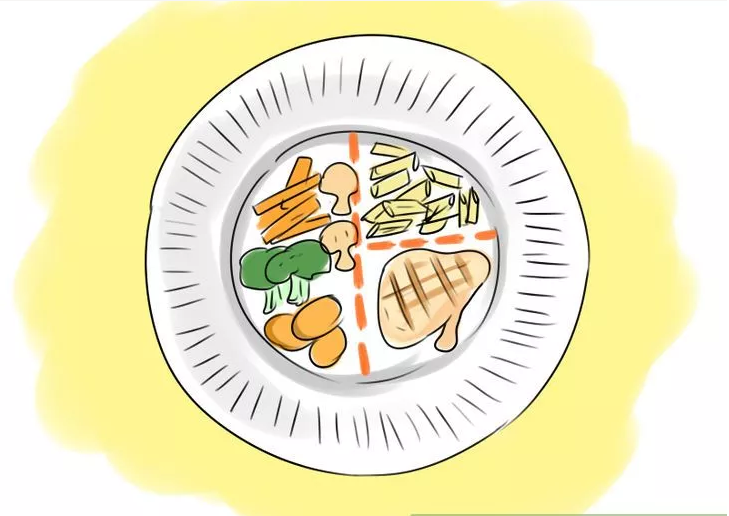
1 Make a meal plan using your plate as the blueprint.
2 Grab a paper dinner plate. Find a non-toxic pen and start to draw serving lines.
·         Draw a line down the center of the plate first, dividing it in 2.
·         Draw a line on 1 side of the plate that divides half of the plate into 2 sections. You should have 1 large section and 2 smaller sections.
3 Load vegetables onto the largest section of the plate. Choose non-starchy vegetables, such as carrots, cauliflower, mushrooms, turnips, broccoli, green beans, beets, onion, cucumber, tomatoes, lettuce, other greens or peppers.
4 Add your whole grain or vegetable starch to 1 of the smaller sections. This could include a serving of bread, pasta, potatoes, sweet potatoes, peas, cereal or crackers.
5 Finish by adding a lean protein to the last section. This can include a 4 to 6 oz. piece of turkey, chicken, lean pork or beef, fish or tofu. Do not include skin or high amounts of oil.
6 Eat fruit, dairy and low-carb snacks as snacks. You may also include a small piece of fruit or 1/2 cup of fruit salad after a meal.
7 Consider choosing all the raw ingredients of a meal using your plate blueprint.Then, cook a recipe that contains these ingredients and place it back on your plate in a mixed form for mealtime.
·         Adjust recipes that do not contain enough produce or contain too much oil or protein according to the "Create your Plate" plan.

·         Use the plate for breakfast, lunch and dinner. Stick to meal times with a few snacks in between. Healthy, low carbohydrate mid-morning or mid-afternoon snacks can curb spikes in blood glucose levels.

How to Create a Type 2 Diabetic Diet Plan - Part4 Healthy Additions

1 Add fish that is rich in Omega-3 to your diet. Salmon, mackerel, tuna, sardines and cod are healthy, lean proteins. Replace your meat with fish at least 2 times per week.
2 Replace trans fats and saturated fats with mono and poly-unsaturated fats.Instead of using animal fats and whole dairy, eat olive, almond, canola, walnut, pecan or avocado oil, as well as the whole food version of eac
3 Do not eat high amounts of any of these foods. They have high caloric content, so they should be used sparingly.
4 Add in low-fat dairy, such as non-fat yogurt, as a snack each day. Studies have shown that it can improve bone mass and help with weight loss if it is part of a healthy diet.

Thứ Ba, 15 tháng 11, 2016

How to Create a Type 2 Diabetic Diet Plan - Part 3 Carb Awareness

1 Track your carbohydrate levels closely. These have the highest effect on your blood glucose level.
·         Consider downloading an application, like MyNetDiary Diabetes Tracker. It has a carb counter that can help you manage meals.
2 Buy healthier versions of the carbohydrates you cook.
·         For example, choose whole grain pasta and bread over white bread and regular pasta. Try to find healthier versions of cereals, sandwich breads, tortillas and more.
·         Compare the packaging and choose based on the amount of sugar and the amount of fiber per serving. High fiber foods help to control blood glucose levels, so aim for carbohydrates with at least 5g or more of fiber per serving.

3 Reduce the amount of carbohydrates you eat. Reduce your serving amount to 1/3 cup.

How to Create a Type 2 Diabetic Diet Plan - Part2 Planning

1 Go to your public library. Look up cook books made for people with diabetes.
2 Subscribe to Diabetes Cooking and/or Diabetes Health. These magazines give seasonal additions to enhance your meal plan.
3 Study the glycemic index. The lower the glycemic index, the lower the effect the food will have on your blood sugar.
·         Go to internet to look at the glycemic index for popular foods. For example, a baked russet potato has a glycemic index of 111 but a serving of carrots has a glycemic index of 35.

·         Go to the website to research the glycemic index of your favorite foods.

How to Create a Type 2 Diabetic Diet Plan - Part1 Doctor Recommendations


A Type 2 Diabetic diet usually involves replacing simple carbohydrates with complex carbohydrates and processed foods with nutrient-rich fruits and vegetables. It is created to balance blood glucose levels and reduce the symptoms of diabetes or the on-set of diabetes for the pre-diabetic. A diabetes diet is sometimes referred to as medical nutrition therapy (MNT). You can create a Type 2 diabetic diet plan by following these guidelines.
1 Ask your doctor what changes in diet are recommended after being diagnosed with Type 2 diabetes. Request pamphlets or sample eating plans.
·         Your doctor may recommend a calorie restriction diet, if you have weight-loss goals. However, your doctor may only recommend that you eat healthier foods and remove refined sugars and carbs, or medical nutrition therapy (MNT).
2 Consider seeking treatment with a dietitian or nutritionist.
·         If you have allergies, a busy schedule or you do a limited amount of cooking, a nutritionist can give you nutrition counseling over several sessions. Implementing a plan may be easier if you can ask advice regularly.

3 Keep a food diary. The process of tracking what you have eaten will make you more aware of the foods that exacerbate your Type 2 diabetes.

Thứ Năm, 10 tháng 11, 2016

How to Exercise - Part5 Balance Exercises

1 Try T’ai chi. T’ai chi is a Chinese martial art, the forms of which are done in sequences of slow movements. Doing t’ai chi will allow you to build better balance but it can also be very relaxing. Find a local group to practice with or take a class from a local gym or community center. You can also find lessons online or DVDs which will allow you to practice at home.
2 Do weight shifts. Weight shifts are a great starting balancing exercise. These are done by standing with both feet on the ground, hip width apart. Next, shift all of your weight onto one leg and lift the other slightly off of the floor. Hold the position, trying to maintain good form, for 30 seconds. Do the other leg. Repeat as much as you want.

3 Try to single-leg balance. These are done same as the above, with the exception that the lifted leg is bent backwards at the knee. This will work on your front-to-back balance, whereas the previous one focuses more on side-to-side. Both should be used in conjunction.

How to Exercise - Part4 Core Muscle Exercise

1 Understand core exercises. Core workouts develop the muscles around your abdomen. This has many benefits. With a stronger back, you will be less prone to back pain and injury and you will also be able to improve bad posture. Paired with weight loss, strong core muscles will also give you defined abs.
2 Try planks. Planks are probably the most efficient core exercise. You can greatly improve your core strength with just a few minutes of this exercise every day. Planks are done by taking a position similar to a push up, but supporting the upper half of your body on your forearms and holding the position for as long as possible. It will surprise you how difficult it is if you’ve never tried it but the exercise is extremely effective.
3 Do Crunches. Crunches are another great core exercise, done by lying face up, knees bent, arms crossed at your chest, and curling the head up towards the pelvis. Lower yourself back down and repeat.
4 Do sit-ups. Sit ups are similar to crunches and are done by lying face up, knees bent only slightly, and rolling your upper body into a sitting position. You can cross your arms in front of you or run your palms up and down your thighs as you move to guide your movement.

5 Try bridges. Bridges are a great core exercise because they also work on your bottom and lower back muscles. These are done by lying on your back, with your knees bent and your arms flat on the ground at your sides. Slowly roll your back and lift your hips until a straight line is created between your shoulders and knees, your back and thighs parallel, and then slowly lower it back into starting position.

How to Exercise - Part3 Anaerobic Exercise

1 Understand anaerobic exercise. Anaerobic exercises are those done at a higher intensity for shorter periods of time. These build strength and help your body to become accommodated to working hard. Paired with a healthy diet, these exercises can also help you to lose weight, as your body’s caloric use will increase. These types of exercise are actually arguably better for burning fat than aerobic exercises. 
2 Run. Running is tough on the knees and bone structure but is still an excellent form of exercise. You can run locally around your neighborhood or around a track at a gym. Remember that running is different than jogging: it’s much faster and much harder to do!
3 Lift weights. There are many different types of weights you can lift and ways to lift them, but doing this type of exercise will help you build a variety of muscles and increase your strength. Be sure to start small and work your way up, since trying to lift something which is too heavy is a common way to injure yourself.
4 Do push-ups. Push ups are done by placing yourself with your stomach on the ground. Place your feet so that your toes are flat on the ground, then place your hands flat on the ground at face level, a shoulder’s width apart. Then, keeping the line of your back and legs completely straight, lift your body with your arms by pushing against the ground so that your whole body is supported on your toes and hands. Lower yourself back down so that your nose is nearly touching the ground and then raise yourself back up. Repeat.
5 Try squats. Squats are done by standing with your feet a shoulder’s width apart, back straight, arms crossed in front of you, and slowly lowering yourself down as if to sit in a chair. Once in the sitting position, slowly raise yourself back up. These are a great exercise for your core and leg muscles.

6 Do burpees. Burpees (a common military exercise) are done by starting in a standing position, dropping to a crouch, going into a push-up form, going back to the crouch position, and then jumping upwards with hands raised to return to the standing position. This is a great workout as it exercises all areas of the body.

Thứ Tư, 9 tháng 11, 2016

How to Exercise - Part2 Aerobic Exercises

1 Understand aerobic exercise. Aerobic exercise is often called a “cardio” workout, since it is designed to increase and improve blood flow. These types of exercises are of a lower intensity but last for longer periods of time.
2 Climb stairs. Climbing stairs is a great way to get your heart rate up. You can climb actual stairs or you can use a stair machine at a gym. Climbing stairs improves your leg muscles as well as your butt. Be careful if using actual stairs, however, as you do not want to fall and get seriously injured. 
3 Jump rope. This is not just a fun game for children but also an excellent workout. Working the arms, legs and core muscles, this is an exercise that you can easily do at home. It is also well known for improving balance and is excellent for people who intend to play sports.
4 Do jumping jacks. Jumping jacks are an exercise performed by standing with the legs together, arms at your side, and then jumping to move the legs outward and raising the arm together above your head. Jump again to return to the starting position. These are great for getting your heart rate up and burning calories.
5 Walk or jog. Walking and jogging are wonderful ways to get your heart rate up. Though jogging may be difficult on the knees for some people, walking is certainly an accessible exercise and should be done by those at every level. Studies have shown that walking an hour a day can help you maintain your weight over time and reduce your likelihood of certain conditions, like hypertension and obesity. 
6 Swim. Swimming is great exercise and is fun to boot. This will work different muscles depending on the style of swimming you do. Swimming is frequently recommended for people with joint problems or those that are significantly overweight, as it can take a great deal of strain off of the skeleton while still raising the heart rate.

7 Bike. Riding your bike is an accessible, environmentally friendly, and very effective way to get exercise. Working muscles in most areas of the body, bike riding will get your heart rate up while it gets you somewhere! You can bike outside or you can get a stationary bike and stay at home.

How to Exercise - Part1 Preparations and Warm Ups

Exercise is a great way to get a healthier, stronger body. It can also be a great way to relax and make you happier. It is important to remember, though, that you should always alternate between different types of exercise to ensure that your whole body gets the attention it needs. If you want to get started exercising to improve your quality of life, read below for helpful explanations, tips, and example workout routines for every ability level and lifestyle.
1 Wear the right clothes. You will want to wear clothes that will not restrict your movements or blood flow. Don’t wear clothes which are too tight, especially around your joints. You will also want to wear clothing which is made of a material which breathes well, since you will sweat when doing many forms of exercise. Clothes specifically designed for exercise can easily be found.
2 Wear the right shoes. Just because we call them tennis shoes does not mean they are great athletic shoes. Shoes like Converse have little shock absorbency and can be terrible for your feet and bones. Get shoes which fit comfortably and are designed for the type of activity that you intend to do.
3 Hydrate. Drink lots of water before you exercise. Your body will need the water to help your muscles work and also to help you sweat. If you’re dehydrated before you start, just think about how you’ll feel afterwards!
4 Don’t stretch! Don’t stretch before exercising. Contrary to popular belief, studies have shown that this is not helpful and will not allow you to perform any better. If anything, stretching before exercising will make you worse off: it’s a great way to pull or strain a muscle and hurt yourself!
5 Do warm up exercises. Though researchers cannot agree definitively on whether or not warm ups help you to perform better in exercises, they all agree that warming up certainly won’t hurt. Warm up before exercising by doing a less intense version of your intended workout for 5-10 minutes. If you plan to run, jog first. If you intend to swim, swim slowly.
6 Check with your doctor. Certain conditions may make it a good idea to check with your doctor before starting an exercise regimen. There are exercises for every health condition, but it’s a good idea to know what to avoid. Exercising should make you feel healthy and good in your own body: not hurt you!
·         If you have diseases or conditions like asthma or lung problems, arthritis, diabetes or liver and kidney problems, or heart disease, definitely talk to your doctor before starting a new exercise regimen.
·         If you notice certain problems, you will also want to talk to a doctor. These include things like pain or dizziness following physical exertion, shortness of breath after very mild exertion or when at rest, or swelling in the ankles.
·         You may also want to talk to a doctor simply to find out what kind of exercise they recommend for your particular goals and health conditions. You can also consult with a nutritionist and a trainer for more information on exercising and how you can best meet your goals.